
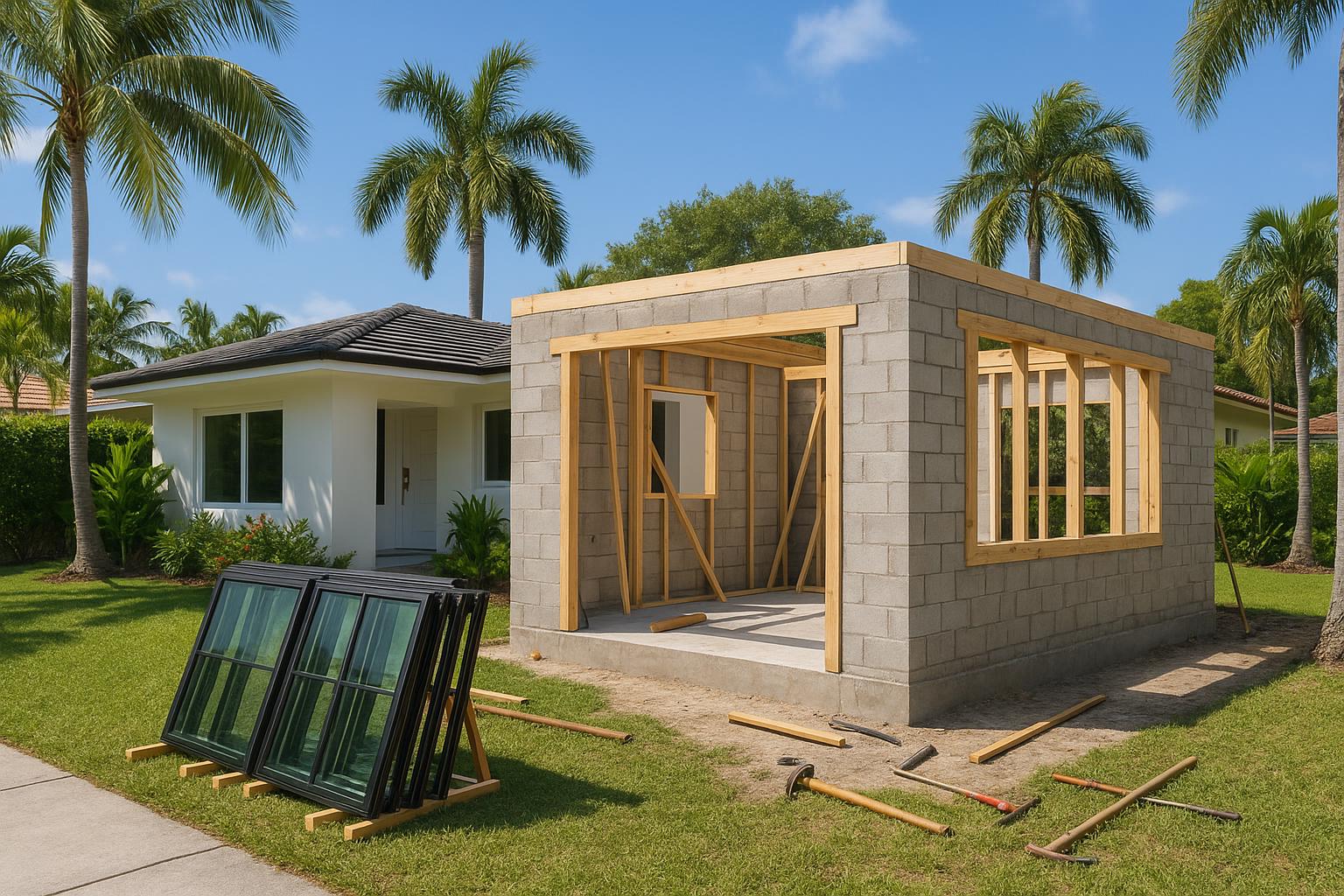
Why Room Additions in Miami Require Extra Planning
Adding a room to your home is one of the most impactful investments you can make. Whether your family is growing, you need a dedicated home office, or you simply want more breathing room, a well-planned room addition can transform your daily life. But if you live in Miami, you already know that building here isn't quite like building anywhere else.
Between strict hurricane building codes, complex permitting processes, and the realities of South Florida's climate, a room addition project can hit unexpected delays if you don't plan carefully from the start. The good news is that most of those delays are entirely preventable. In this guide, we'll walk you through the key steps to keep your room addition on track and on budget.
Step 1: Define Your Goals Before You Design
Before you start picking out finishes or drawing floor plans, take a step back and ask yourself a few important questions:
- What problem are you solving? Do you need an extra bedroom, a larger kitchen, or a dedicated space for remote work?
- How will this addition connect to your existing home? Flow and functionality matter just as much as square footage.
- What's your realistic budget? Knowing your financial boundaries early helps your contractor design something you'll love without painful surprises later.
When homeowners in Kendall, Coral Gables, or Pinecrest come to us with a clear vision of what they need, the design phase moves significantly faster. Vague goals lead to multiple revisions, and revisions lead to delays.
Step 2: Understand Miami's Permitting Process
One of the biggest sources of delay in any Miami remodeling project is the permitting process. Miami-Dade County has some of the most rigorous building codes in the country, largely because of hurricane preparedness requirements. Here's what you should know:
- Almost every room addition requires a permit. This includes structural work, electrical, plumbing, and mechanical systems.
- Plan review can take several weeks. Submitting incomplete or incorrect plans is the number one reason permits get delayed. Working with a contractor who has experience navigating the local building department can save you weeks of back-and-forth.
- Inspections happen at multiple stages. Foundation, framing, electrical, plumbing, and final inspections all need to pass before your project is considered complete.
At Revel Room Addition, we handle the entire permitting process for our clients. We prepare code-compliant plans, submit them on your behalf, and coordinate every inspection so nothing falls through the cracks.
Step 3: Design for Miami's Climate and Building Codes
South Florida's weather creates design considerations you won't find in most other parts of the country. Your room addition needs to be built to withstand hurricane-force winds, heavy rainfall, and intense humidity. That means:
- Impact-resistant windows and doors are typically required and should be factored into your budget from day one.
- Roof tie-downs and reinforced framing must meet the Florida Building Code's High-Velocity Hurricane Zone (HVHZ) standards, which apply throughout Miami-Dade County.
- Proper moisture management is critical. Without the right vapor barriers, insulation, and drainage planning, your new addition could develop mold issues within a few years.
These aren't optional upgrades — they're requirements. A contractor who specializes in Miami construction will build these elements into the design from the beginning rather than treating them as afterthoughts that inflate your budget later.
Step 4: Choose Materials and Finishes Early
Supply chain issues have improved since their peak, but material lead times can still cause unexpected delays. Custom windows, specialty tiles, imported cabinetry, and even certain roofing materials can take weeks or months to arrive. Here's how to stay ahead:
- Select your major materials during the design phase, not after construction starts.
- Ask your contractor about lead times for every significant item and build those timelines into the project schedule.
- Have backup options ready. If your first-choice floor tile has a 12-week lead time, knowing your second choice in advance prevents the project from stalling.
We've seen homeowners in Doral and Homestead lose three or four weeks simply because a finish selection wasn't made in time. It's a completely avoidable delay that just requires a little advance planning.
Step 5: Hire a Contractor Who Manages the Full Process
Room additions involve multiple trades — architects, engineers, electricians, plumbers, roofers, drywall installers, painters, and more. When homeowners try to coordinate these trades themselves or hire a general contractor who subcontracts everything without strong project management, timelines slip quickly.
Look for a remodeling company that offers:
- In-house project management with a single point of contact for your entire build
- A detailed construction schedule with milestones you can track
- Experience with Miami-Dade County codes and inspections
- Transparent communication — you should never have to wonder what's happening with your project
This is exactly how we operate at Revel Room Addition. From the initial consultation through the final walkthrough, one team manages every detail so you're never left coordinating between multiple contractors.
Step 6: Plan for How You'll Live During Construction
This is the step most homeowners forget, and it can make the difference between a stressful experience and a manageable one. Depending on the scope of your room addition, construction could last anywhere from six weeks to several months. Consider:
- Will you stay in the home during construction? Most families do, but you'll need to plan around noise, dust, and limited access to certain areas.
- Do you need temporary adjustments? If your kitchen or bathroom is affected, set up a temporary cooking or bathing area in advance.
- Communicate with your contractor about work hours so you know when crews will be on-site and can plan your daily routine accordingly.
The Bottom Line: Preparation Prevents Problems
A room addition is a significant project, but it doesn't have to be a stressful one. The homeowners who have the smoothest experiences are the ones who invest time in planning before a single nail is driven. Define your goals, understand the permitting landscape, choose your materials early, and partner with a contractor who knows how to build in Miami's unique environment.
If you're considering a room addition in Miami or the surrounding areas, Revel Room Addition is here to help you plan a project that stays on schedule and delivers the space your family deserves. Reach out to us for a free consultation and let's start turning your vision into a plan that actually works.